Sally Hinton Wildlife Photography
The Galapagos Islands. November 2011
09th December 2011
09th December 2011
The Galapagos Islands were named after the giant Tortoises that live there (Islands of the Tortoises) but also called The Enchanted Islands mainly due to the dense fog that conceals the Islands and makes them seem to appear and dissappear at will. I found them Enchanting for another reason - the magnificent wildlife that lives there totally unafraid of man! Imagine standing beside a pair of Albatross as they go through their farewell rituals before parting for 18 months on the wing or watching as new born sealion pups call out to you while older pups in groups harass the marine iguanas as they sunbake on the rocks. The wonder of watching Blue Footed Boobies fishing right beside you and also experience the excitement of a chick being fed! Nowhere else in this world can you become part of the wildlife as on the Galapagos Islands!
When I left on my adventure I found that so may people who asked me where I was going had never heard of the Galapagos Islands so here is a very brief summary: The Galapagos Islands are an archipelego of volcanic islands distributed around the equator in the Pacific Ocean, 972 km west of continental Ecuador. They are a national park and a biological marine reserve. The islands are famed for their vast number of endemic species, which were studied by Charles Darwin during the voyage of the Beagle (1835). His observations and collections contributed to the inception of Darwin's theory of evolution by natural selection. It was the endemic Galapagos Mocking Birds that Darwin first noticed to vary from island to island. Straddling the equator, islands in the chain are located in both the northern and southern hemisphere. Although located on the equator, the Humbolt Current brings nutrient rich cold water to the islands which in turn brings the penguins and sealions. The Galapagos Islands are unique and truly a wonderful experience! Where else could you snorkel to the utter amusement of curious sealion pups?

When I left on my adventure I found that so may people who asked me where I was going had never heard of the Galapagos Islands so here is a very brief summary: The Galapagos Islands are an archipelego of volcanic islands distributed around the equator in the Pacific Ocean, 972 km west of continental Ecuador. They are a national park and a biological marine reserve. The islands are famed for their vast number of endemic species, which were studied by Charles Darwin during the voyage of the Beagle (1835). His observations and collections contributed to the inception of Darwin's theory of evolution by natural selection. It was the endemic Galapagos Mocking Birds that Darwin first noticed to vary from island to island. Straddling the equator, islands in the chain are located in both the northern and southern hemisphere. Although located on the equator, the Humbolt Current brings nutrient rich cold water to the islands which in turn brings the penguins and sealions. The Galapagos Islands are unique and truly a wonderful experience! Where else could you snorkel to the utter amusement of curious sealion pups?
The David Sheldrick Elephant Orphanage. September 2011
07th November 2011
07th November 2011
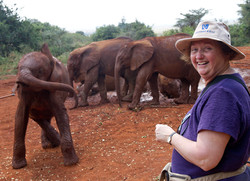
The David Sheldrick Elephant orphange is the most wonderful place! My visit to the orphanage was a pilgrimidge for both myself and my Mother. We had sponsored baby eles since seeing the BBC program called "Elephant Diaries" about 5 or so years ago and Mum simply loved her baby orphan and one of the last things she said to me before she died was that I must visit our babies in Nairobi - so I have! The little baby eles are totally milk dependent for 2 to 3 years and require round the clock love and care. From the orphanage they then head down to Tsavo National Park where they start their rehabilitation back into the wild with the ultimate goal of living totally free wild lives. At the orphanage the babies come into the mudbath for milk and a play at 11.00am every morning and are so enertaining - I went back for 4 days simply mesmerized by them! At 5.00pm foster parents can go back and watch the babies have their 5.00pm feed and get bedded down for the night. They have little blankets put around them and a matress to sleep on and finally a big blanket thrown over the top. The little eles are very prown to pneunmonia and they have lost a lot of the littles this way. The keepers are wonderful and sleep in the stables as the babies require feeds every 3 hours day and night. It was a fantastic experience and definitely a return visit will be on the agenda and I am sure Mum was with me at the orphanage laughing and enjoying their antics with me!
The Masai Mara. September 2011
07th November 2011
07th November 2011
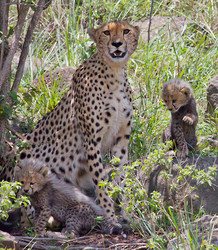
The Masai Mara is a wonderful place - straight out of "Big Cat Diary"! It was so green with very long grass and looked so lush after coming from the dry Serengeti. One of my ultimate wishes was to see the great migration - I knew that it was a gamble and depended entirely on the rains. The big herds of wildebeast and zebra did not actually get as far as the Mara this season - there were some herds of course but nothing like the usual and no crossings. The rains were quite different this year compared to normal and the long grass that I thought was so lush had actually turned to straw and was of little value to the herds and too long for the gazelle and antelope who prefer short sweet grass. The rangers were in fact buring off sections of the plains to start the grass shoots coming through as they said that the wildebeast had not done their job this year! Many cheeta again which was fantastic and alot of lions with their kills (mostly zebra). We did see a couple of young rhinos from a distance - always impressive creatures! The highlight for me was watching a female cheeta cross the grass land and head up into some rocky scrub. She moved effortlessly and climbed up onto a number of termite mounds as she progressed towards the rocks all the time looking around carefully checking for danger. At one point she walked right past our vehicle so close I could have patted her - she took absolutely no notice of us at all! Finally she sat up on the rocky outcrop and called and out of the scrub came three little balls of fluff who gambled all around her joyful at the return of their mother! She was so beautiful and it was a priviledge to share that moment with her!
The Serengeti Plains. September 2011
07th November 2011
07th November 2011
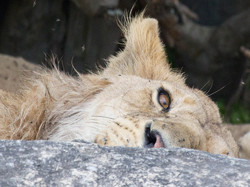
The Serengeti is so large - I believe Serengeti in Masai means "endless plains" and this is so true! It was the dry season and so there appeared to be no or very little grass on the plains and a lot of dust - the big herds of animals were further north in the Masai Mara following the rains. We did see huge herds of gazelle and antelope which kept the big cats well fed. I never did see a thin lion or cheeta! Lots of cheetas in fact and watched two unsuccessful chases - wonderful to see them move so effortlessly accross the ground! We saw a huge pride of lions (we counted 21) with no male in sight. My guide (Clement) told me that the males would be close by but the cubs in the pride were about half grown and he said they really annoy the lions at this age (just like teenagers?). One of the many highlights was watching two male leopards playing in a tree near a creek -they run down out of the tree, played hide and seek in the grass and back up the tree and then chased each other way up in the tops of the tree! After all that energetic exercise they then went to sleep astride branches in the tree. It was a magical moment to see them so playful! An afternoon spent at the hippo pool was also fascinating - there must have been hundreds all together in a huge pond overlorded by a massive male - wonderful photo opportunities! Another highlight was seeing two male cheetas lying under trees patting distance from the vehicle - they truly are one of my favourite animals! One unusual creature was a male aguma lizard which was bright blue and pink almost flourescent actually - we had stopped at the entry gate to the Serengeti and had climbed up a small rocky outcrop to view the famous magical plains and I thought quite bizarely that everyone were taking photos of the rocks instead of the view but it was infact one of these amazing lizards sitting on the rocks!
The Ngorongono Crater - Tanzania. September 2011
07th November 2011
07th November 2011
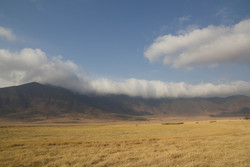
The Ngorongono Crater in Tanzania is one of the natural wonders of the world and from my brief visit is highly valued by the Tanzanian people. It was an amazing experience slowly edging our way down into the crater via a very rough pot-hole infested dirt track - but to watch the sun rise over the crater rim as we gradually descended onto the crater floor was magic indeed. The zebra and wildebeaste were heading for their morning drink so line upon line of these beautiful animals passed us as they steadfastly approached the watering holes. It was the dry season and the herds of animals sent dust flying in all directions - the dust and sunrise did make for some atmospheric images! The crater is an oasis for the animals - no need for migration here. From the crater floor you can see the entire rim and as the sun rose the low clouds sat over parts of the rim as if they were spilling over from above - very beautiful indeed! We spent an entire day game viewing around the floor, having lunch at the springs surrounded by hippos! We saw mating lions, Rhino and many birds, gazelle and of course the zebra and wildebeest. We climbed very slowly out of the crater late in the afternoon again the dirt track was very rough and full of pot holes and rocks - definitely 4WD material! Overall a wonderful experience!
16th IAP Conference - Italy. August 2011
02nd November 2011
02nd November 2011
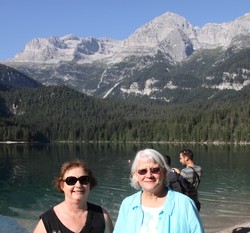
The 16th IAP (International Association of Phytoplankton Taxonomy and Ecology) conference was held at the Institute Agragio Di San Michele all'Adige in San Michele all'Adige (Trento) in the Italian Alps - some of the most stunning scenery I have ever scene! Unfortunately the district was experiencing a heat wave for most of the week I was there and for those who know me well will appreciate the irony! The temperatures each day sat around 37 degrees dropping to 30 degrees at night. The Institute was not air conditioned as they seldom have such extreme heat so we all suffered trying to think intelligent thoughts under such conditions. I walked each morning up the mountain behind the Institute to capture the mountains as they received the first light of the day - truly stunning. We had an excursion mid week higher up into the alps and visited Lake Tovel - an alpine lake which was amazing! The Lake was famous for turning bright red in years gone by and was attributed (mythically!) to be the blood of dead soldiers who died in a very bloody battle that occurred on the edge of the lake. The red colour was in fact due to summer blooms of a dinoflagellate called Glenodinium sanguineum (an algae) that occurred regularly - hence our visit to the lake!
Overall the conference, despite the heat, was a stimulating and inspiring experience for me as I head towards the completion of my studies! I enjoyed meeting many of the gurus of the algae world and appreciated their guidance and encouragement.
Overall the conference, despite the heat, was a stimulating and inspiring experience for me as I head towards the completion of my studies! I enjoyed meeting many of the gurus of the algae world and appreciated their guidance and encouragement.